
The Hidden Reasons Sleep Training Can End in Tears and How to Prevent It
Sleep training is often presented as the solution to exhaustion.
Follow the method. Stay consistent. Be confident. And your baby will sleep.
But for many families, that’s not how it unfolds.
Instead, it ends in tears — frustrated tears, confused tears, overwhelmed tears. And not just from your baby.
If you’ve ever found yourself thinking, “Why isn’t this working?” you’re not alone. And more importantly, you’re not doing it wrong.
The truth is, sleep training doesn’t usually fail because of the method itself. It often unravels when it’s introduced in the wrong order or too soon — before the right pieces are in place. It’s like trying to build a house without laying the foundation first. You can have the best design in the world, but without the structural groundwork, cracks will always appear.
Independent sleep isn’t something we force into existence. It’s something we build.
When rhythm, environment, cues, and gradual skill development are established first, sleep training becomes calmer, clearer, and far more successful. When they’re missing, it can quickly unravel.
Let’s walk through the key areas that are often missed before “sleep training” begins. With my approach, these essential steps come before teaching the skill of independent sleep. Many parents understandably jump straight to sleep training first, but overlooking these earlier pieces is often where the struggle really starts.
five Key Areas That Are Often Missed Before Sleep Training
1.Understanding Your Baby’s Unique Sleep Profile
One of the biggest mistakes I see — and I mean almost every single day — is misalignment between what a baby’s actual sleep needs are, the importance of a well-placed, carefully carved sleep routine through the day, and what families believe they should be doing.
Most sleep schedules found online or in books are based on averages. And while averages can be helpful as a starting point, they don’t account for individuality. Just like milk intake, height, weight, temperament, or developmental pace, sleep needs vary from child to child — sometimes significantly enough to cause disastrous effects on sleep duration, sleep quality, and night wakings.
When families begin following a sample schedule simply because it says “this is what a 9-month-old should be doing,” the struggle often starts there.
Naps and bedtime end up being placed at times that don’t match a baby’s natural sleep pressure. And suddenly naps, bedtime, and night sleep start to unravel. This is often the point where parents assume the problems are caused by more common sleep issues — when in reality, it usually begins here first.
This is why reviewing sleep patterns and logs is always my first port of call. A few days of data can reveal patterns that most people wouldn’t know to look for, and small timing adjustments alone can resolve far more than people expect.
Before moving forward, I always aim for 3–4 days of rhythm that genuinely fits the child. Even something as simple as waking your baby at the same time each morning can dramatically improve sleep and create a much stronger platform for success — however, this is just the beginning. There is much more to it than this.
Because without this step, sleep pressure won’t be right, and both you and your baby will find the process much harder than it needs to be — and in many cases, unsuccessful. It’s not that your baby isn’t capable of developing the skill of self-soothing; it’s that they haven’t been prepared or lined up properly for success. It’s like trying to run a marathon in the wrong shoes or without the right fuel. The skill itself isn’t the problem — the preparation is.
2. Creating a Sleep Environment That Supports Sleep
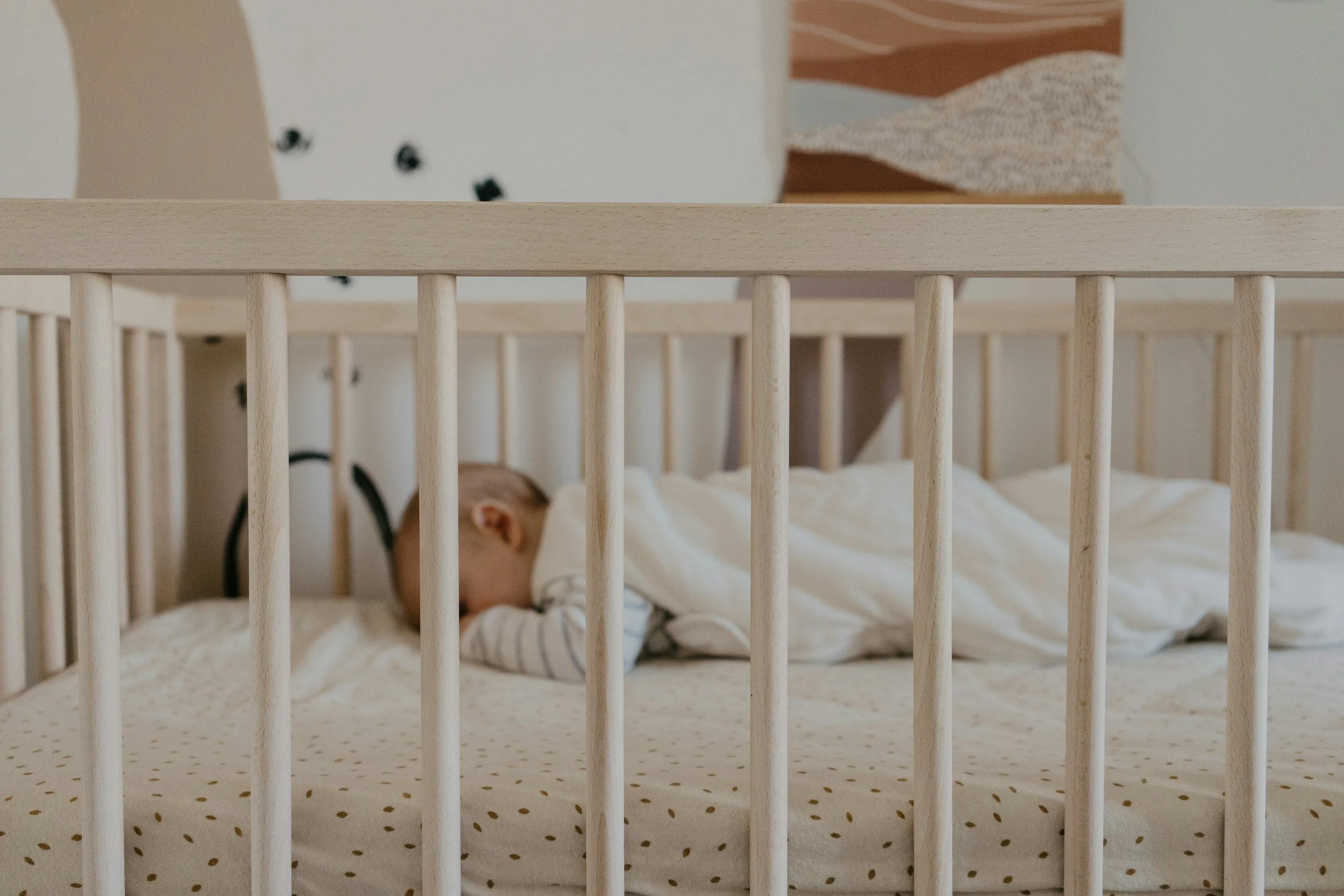
The sleep environment plays a much bigger role than most people realise.
Small details — things that are often overlooked — can significantly influence how easily a baby falls asleep and how well sleep connects throughout the night.
Darkness, consistency, sound, temperature, and familiarity all matter more than many parents expect. When the environment feels stable and predictable, sleep becomes easier for the body to maintain.
If independent sleep is the goal, the sleep space itself also needs to support that process. Babies need to feel comfortable and familiar in their sleep environment before we expect independence there.
Many families are surprised by how much improvement can come from making the right adjustments here — but knowing which adjustments matter most is often where guidance makes the difference.
3. Using Rituals and Sleep Cues to Prepare for Sleep
Sleep doesn’t begin the moment we place a baby in their crib. It begins with preparation.
This is why rituals are so important.
I promote a consistent morning ritual, a short and simple nap ritual, and a calming bedtime ritual. These repeated patterns create emotional safety and clear sleep cues that help your baby recognise when sleep is approaching.
Without that transition, it’s like expecting someone to switch off instantly without any wind-down — the body simply isn’t prepared.
There is a foolproof bedtime ritual that I share with my clients that not only sets your baby up beautifully for sleep, but also creates the space needed to teach the skill of independent sleep once these preparation steps are in place.
When rituals are consistent, sleep starts to feel predictable and safe — and resistance naturally begins to decrease.
4. Building Sleep Skills Gradually
Sleep training isn’t a single event — it’s a process.
I often compare it to training for a marathon. You wouldn’t start with the full distance on day one. You build strength step by step, allowing the body to adapt before moving forward.
The same applies to sleep.
We build the skill.
Before independent sleep can happen, several building blocks need to be carefully put into place first:
Shaping sleep timing around your baby’s unique needs
Addressing strong sleep associations
Ensuring the sleep environment supports the goal
Establishing rituals that prepare your baby emotionally and physically for sleep
This preparation phase can vary, but with consistency and the right approach, it can happen quickly — sometimes in just a few days — while other cases need more time depending on the starting point.
For me, this preparation work is part of sleep training. In many cases, it is more important than the moment of teaching independent sleep itself.
Because when these pieces are done properly, the process feels supportive and secure — and methods like cry-it-out or extinction simply aren’t necessary.
Each building block makes the next step easier. Skip them, and the entire process becomes harder than it needs to be.

5. Following a Clear Plan
Another common challenge is the “yo-yo” approach — trying one strategy for a night or two, deciding it isn’t working, and then switching to something else.
This creates confusion for your baby and often resets progress entirely.
Sleep change works best when there is a clear sequence and a realistic commitment window. The overall process can take as little as 10 days up to three weeks for more challenging cases, when approached with consistency and structure.
When families understand the order of the process, everything begins to feel calmer, clearer, and far less overwhelming.
Choosing the Right Level of Support for Your Journey

Sleep training does not have to end in tears.When the groundwork is done properly and in the right order, independent sleep becomes something we guide and build — not something we force.
And this is where many families realise they don’t just need another method. They need a clear pathway.
If you’re the kind of parent who likes understanding the process and working through it step by step at your own pace, The Sleep Academy gives you a structured roadmap through every layer of sleep in the correct sequence — so you can implement it confidently and calmly.
If you would rather have personalised guidance where the analysing, tracking, and decision-making are carefully supported and tailored to your child, my bespoke Private Coaching Program offers that deeper level of hands-on support.
Both follow the same proven philosophy. The only difference is the level of guidance you want along the way.
Because the goal isn’t just better sleep. It’s feeling confident, supported, and clear every step of the way.
